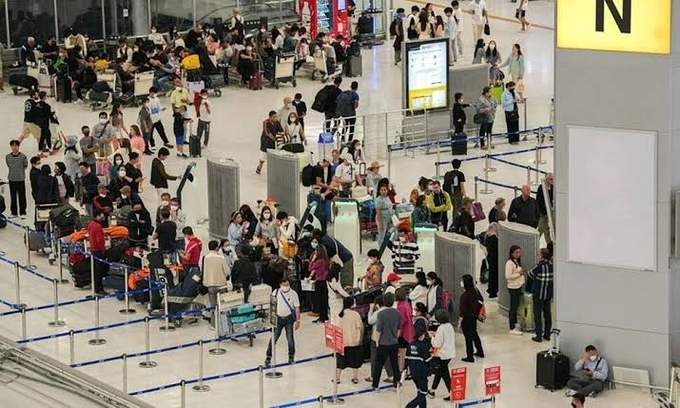
Thailand Slips Behind In Regional Aviation Rankings
Thailand officially lost its position as Southeast Asia second largest aviation market in July, slipping to third place with a total of 6.9 million seats, which reflects a three percent reduction in capacity, according to recent data released by aviation analytics firm OAG.
Citing reports from OAG, the latest industry metrics show that Indonesia successfully maintained its dominant position as the largest aviation market in the region, registering a total of 10.9 million available seats and a modest 0.3 percent year-on-year growth.
The broader regional shift saw Malaysia and the Philippines trail closely behind Thailand in the updated rankings, as changing economic pressures and operational hurdles forced multiple carriers across the area to reassess their flight schedules.
According to industry analysts, the decline in flight frequencies across several regional hubs stems directly from mounting geopolitical tensions in the Middle East that continue to disrupt international travel patterns and carrier deployment strategies.
Fuel Costs And Regional Adjustments Drive Capacity Cuts
Based on reports from the aviation sector, overall capacity throughout the entire Southeast Asian market experienced a 1.2 percent contraction compared to the same period last year, settling at a total of 50.4 million available seats for July.
The primary catalyst behind these widespread capacity reductions involves soaring fuel expenses triggered by ongoing political instability and conflicts originating in the Middle East, which have placed immense financial pressure on commercial carriers.
A series of prominent Southeast Asian airlines responded to these challenging economic conditions by actively cutting back on international routes, aiming to optimize operational efficiency and protect profit margins against volatile fuel pricing.
Despite the broader regional slowdown, Vietnam Airlines managed to secure its spot as the single largest airline operator in Southeast Asia for July, recording 2.81 million seats with a minimal 0.1 percent year-on-year growth rate.
