New Arctic Shipping Service Sparks Debate
Chinese container shipping company Sea Legend recently launched a regular service across the Northern Sea Route over Russia, connecting Ningbo in China to Felixstowe in the United Kingdom and cutting normal journey times in half during the summer months.
According to reports from financial analysts, this development follows a record number of transits along the polar passage last year, which has long been touted by optimists as a transformative corridor for global maritime trade.
Citing reports on the region's commercial potential, roughly one-third of undiscovered global gas and an eighth of its oil lie in the far north, alongside abundant energy resources that make the region attractive for industrial development.
Despite the enticing prospect of halving traditional transit times, industry leaders emphasize that commercial adoption remains distant due to severe environmental and operational hurdles that continue to plague regular polar voyages.
Commercial and Geopolitical Obstacles Remain
Based on reports from major shipping executives, Maersk Chief Executive Vincent Clerc noted late last year that the commercial viability of Arctic routes is still decades away for the majority of global trade volumes.
The Northern Sea Route is currently restricted primarily to Russian petroleum and mineral transport because international sanctions following the invasion of Ukraine have kept Western and allied shipping groups off-limits.
Furthermore, China's pursuit of an Ice Silk Road introduces new geopolitical complications, as the entire route sits under Russian control while its entry point through the Bering Strait is monitored closely by the United States.
Clerc explained regarding the lack of mainstream adoption, "Because it’s relatively unpredictable when the route opens and closes, there is no commercial demand to switch. Customers don’t want you to flip-flop because their entire lead times get thrown in the air."
Future Outlook for Polar Trade Corridors
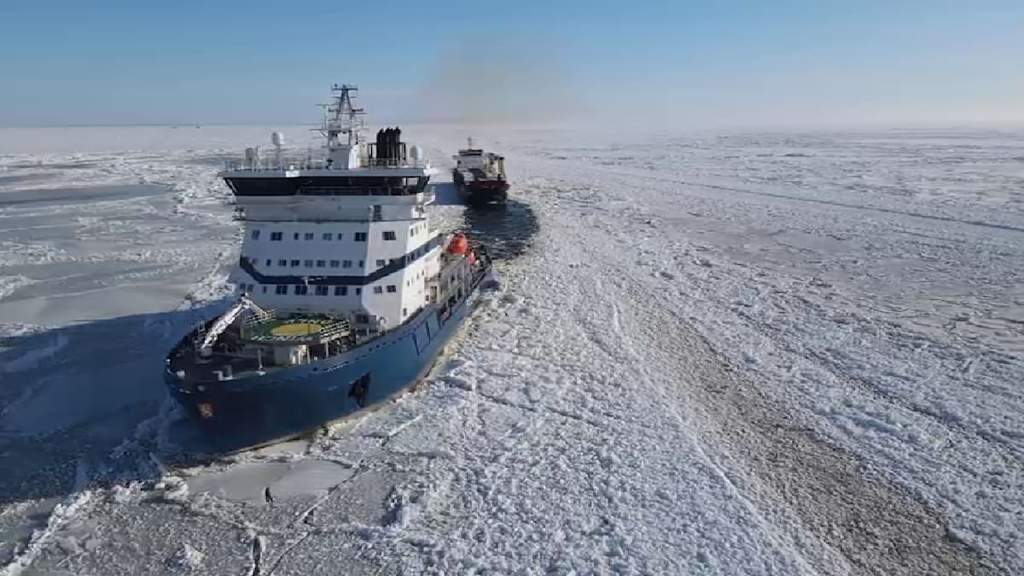
Operational reliability remains a major barrier for businesses, as Sea Legend's weekly service is currently planned for only three months in summer and could face inflated expenses driven by necessary icebreaker escort fees.
According to experts, major container shipping lines will likely continue relying on traditional waterways like the Suez Canal and the Strait of Malacca rather than shifting containerized freight to unpredictable polar passages.
Nevertheless, with the Norwegian archipelago of Svalbard warming at five to seven times the global average, rapid environmental shifts in the polar region ensure that global powers will maintain their strategic focus on the far north.
As geopolitical competition intensifies across the Arctic, analysts conclude that slow yet momentous changes in climate and strategy will eventually reshape international trade over the long term.
