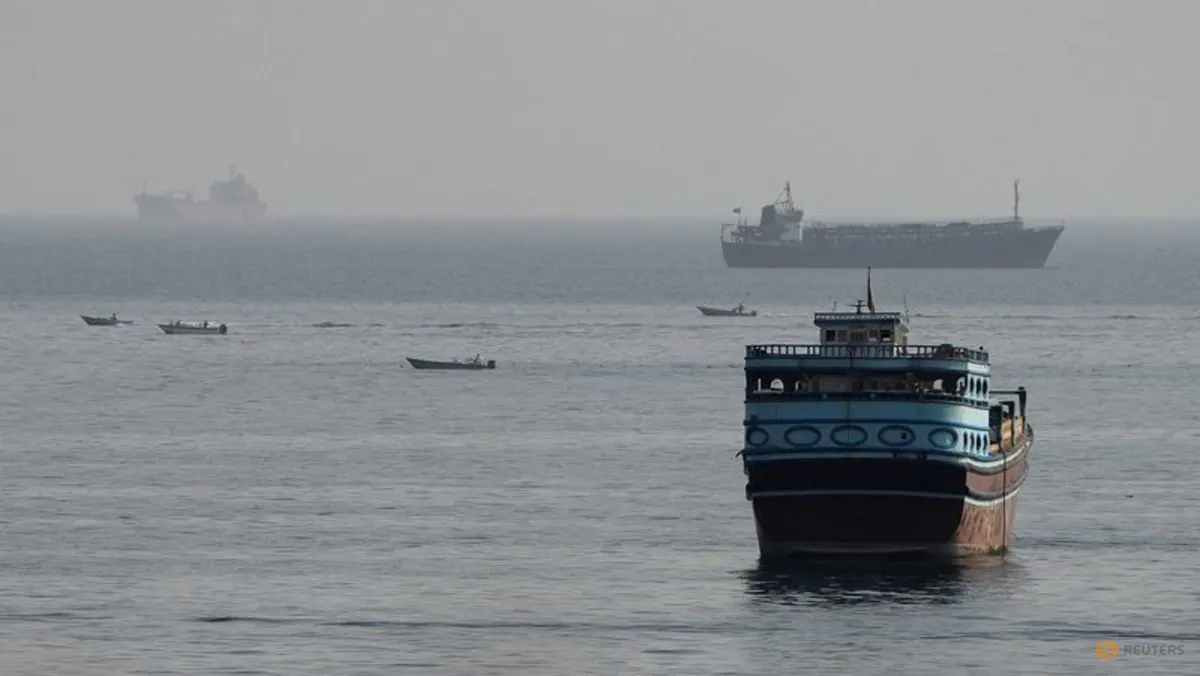
Market Resilience Challenges Conventional Wisdom
Global crude markets have successfully defied predictions of severe supply shortages and skyrocketing prices following the outbreak of the Iran conflict, maintaining trading levels below ninety dollars a barrel according to recent market analysis. Energy analysts point out that strategic reserve releases, alternative pipeline bypasses, and reduced imports from major consumers like China have effectively cushioned the blow against what many economists labeled the largest supply shock in modern history. Rather than surging toward extreme projections, benchmark West Texas Intermediate crude has traded above one hundred dollars on only a fraction of sessions since hostilities began.
Despite widespread skepticism across financial sectors, United States Energy Secretary Chris Wright recently asserted that crude flows through the crucial waterway remain robust, estimating that nearly nine million barrels crossed the Strait daily during the preceding week. Wright defended his assessment against intense criticism from private maritime tracking firms, arguing that conventional commercial monitoring systems severely undercount vessel movements due to covert transit operations. According to reports, these covert operations involve ships intentionally disabling their tracking transponders to evade hostile monitoring.
Accurately measuring regional petroleum output is vital for forecasting broader economic indicators including domestic inflation rates and Federal Reserve interest rate trajectories. While market critics remain highly skeptical of government optimism given historical political incentives to downplay commodity costs, industry experts emphasize that visible indicators on the ground tell a more complex story. Analysts suggest that dismissing higher government estimates prematurely could leave financial markets unprepared for actual supply realities.
"Many private businesses undercount the number of ships leaving the Strait of Hormuz due to ships moving covertly through the waterway," Wright stated during recent press briefings addressing the ongoing transparency debate.
The Challenge Of Tracking Covert Maritime Transit
Assessing true transit volumes has become exceptionally difficult because traditional monitoring mechanisms rely heavily on public transponders known as Automatic Identification Systems. Before the current military escalation, commercial vessels continuously broadcast precise navigational data including vessel identity, speed, and geographic coordinates from loading ports straight to final destinations. Today, however, virtually all oil tankers operating in the high-risk zone have gone dark by turning off their broadcast devices to prevent targeting.
Furthermore, high-resolution satellite imagery vendors have significantly restricted commercial access to real-time visual data following heavy pressure from Washington policymakers. The market now depends primarily on a limited number of European Union satellites, leaving analysts with single snapshots every few days rather than continuous daily surveillance. Sophisticated operators and trading firms routinely study predictable satellite orbits to schedule port loading activities precisely when overhead cameras are absent.
In addition to disabled transponders and limited satellite overpasses, complex logistics chains involving frequent ship-to-ship cargo transfers on open ocean waters have further obscured transparent oversight. These transfers make it nearly impossible for standard open-source intelligence platforms to accurately calculate total daily export volumes leaving the Persian Gulf production hubs. Market participants are thus forced to choose between relying on conservative open-source models or accepting secret government intelligence estimates.
"The available data contradicts him, but the emphasis there is on available, and what is accessible is quite limited," industry analysts note when evaluating the vast discrepancies in current maritime reports.
Physical Evidence Points To Active Regional Flow
Physical evidence observed across regional waterways strongly indicates that petroleum continues moving out of the Persian Gulf despite ongoing military hostilities and active threats to navigation. Growing volumes of visible oil spills documented on recent satellite imagery suggest intense maritime activity, reflecting both hostile interference by regional actors and determined efforts by commercial operators to keep vital shipping lanes open. These physical traces imply that cargo movement is occurring at levels significantly higher than conservative open-source models suggest.
Conservative baseline calculations using visible identified tankers confirm that at least five million barrels traverse the waterway daily under standard observation conditions. Factoring in known operational uncertainties, such as single daily supertanker crossings executed in strict secrecy, pushes realistic volume estimates comfortably toward seven million barrels per day. Additional adjustments for unrecorded convoy movements quickly bridge the gap toward the higher figures cited by federal energy officials.
While political administrations naturally highlight metrics that support favorable economic narratives, seasoned commodity experts caution against total dismissal of classified operational data. Convoys moving under nighttime cover and coordinated defensive formations demonstrate that regional stakeholders maintain high financial stakes in ensuring global supply lines remain operational. Consequently, the actual volume of crude escaping the region unnoticed may continue to surprise mainstream financial forecasters.
Ultimately, persistent stability in global energy pricing suggests that enough petroleum is successfully reaching international markets to prevent catastrophic supply deficits, validating the resilience of modern supply chains against geopolitical shocks.
