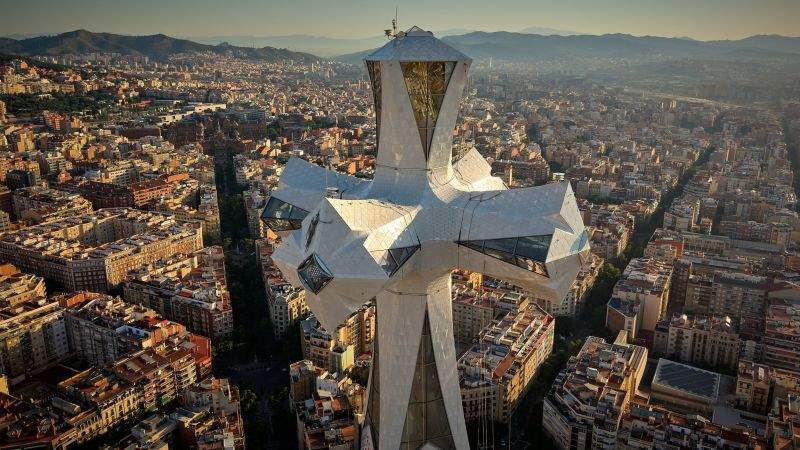
A Monumental Milestone for Barcelona
More than 144 years after construction began, Barcelona's iconic Sagrada Família has reached its final height of 566 feet following the installation of a massive cross atop the central Tower of Jesus Christ in February. Pope Leo XIV is set to lead a Solemn Mass and ceremonial blessing to inaugurate the landmark.
Based on reports from architectural historians, the monumental basilica represents a triumph of color, craftsmanship, and complex geometry. The project honors the visionary architect Antoni Gaudí on the 100th anniversary of his death.
Citing reports from project managers, the final architectural puzzle piece is a brilliant white cross as tall as a five-story building, weighing approximately 100 tons. Manufacturing the cross required 14 prefabricated sections made from concrete and stainless steel.
According to chief architect Jordi Faulí, modern technologies like digital modeling and industrial robots have helped successors interpret Gaudí's original design logic. The overarching methodology established by the Catalan architect has guided the intricate construction process.
Overcoming Historic Adversity and Funding Hurdles
The 144-year construction journey faced immense setbacks, most notably the Spanish Civil War in 1936 when anarchists destroyed many of Gaudí's original plans and plaster models. Fortunately, disciples and collaborators managed to reconstruct lost information using books, drawings, and photographs.
Based on financial disclosures, the expiatory temple is funded entirely through donations and visitor revenue collected since opening to the public in 2010. The COVID-19 pandemic severely impacted ticket sales, but tourism rebounded strongly with nearly 5 million visitors in 2025.
Citing reports from site engineers, the delicate balance of history and modernity required innovative compromises to keep spires lightweight while meeting stringent safety regulations. Modern stainless steel provided necessary strength without violating the aesthetic vision.
According to architect Mauricio Cortés, the team remains confident that the exterior closely matches Gaudí's original design intent. The interior elements leave more room for interpretation since the master architect did not define them in complete detail.
Local Controversy Surrounds Final Phase
While the Tower of Jesus Christ is complete and interior work is expected to finish by 2028, attention has shifted to the controversial Glory Facade. The proposed monumental staircase for the grand main entrance threatens potential demolition of nearby residential buildings.
Based on community reports, local residents and businesses fiercely oppose the expansion plans due to lingering uncertainty regarding property ownership. Longtime neighborhood residents fear their homes could be demolished to accommodate the new entrance portico.
Citing statements from neighborhood association president Salvador Barroso, locals feel left in the dark without clear timelines from the Construction Board. Residents describe the current atmosphere as a pressure cooker ahead of the papal visit.
According to the Construction Board, officials must reach a formal agreement with city authorities before engaging directly with affected residents. Despite the ongoing local friction, celebrations for the grand inauguration continue as scheduled.
