US Government Imposes Ban on Foreign Humanoid Robots
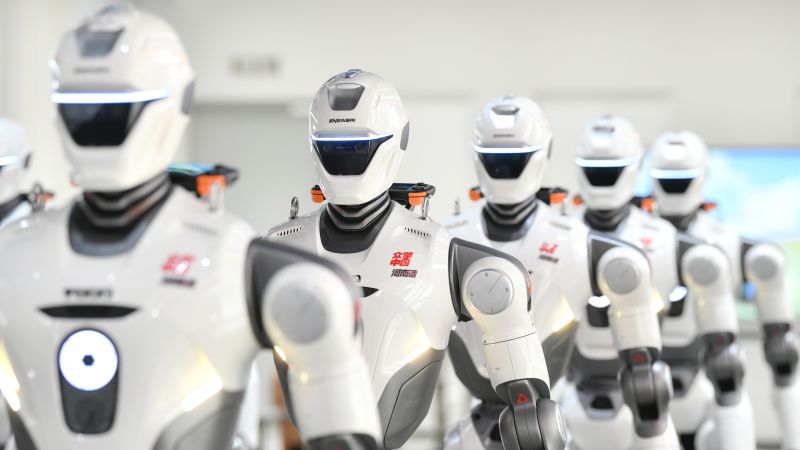
On Tuesday, the Trump Administration officially banned new humanoid and quadruped robot imports from foreign manufacturers, cutting China off from its largest export market due to perceived national security threats.
Based on reports from federal regulators, the restriction aims to curb foreign technology reliance and safeguard domestic supply chains amid an escalating global race for artificial intelligence dominance.
Citing reports from an interagency body convened by the White House, the Federal Communications Commission declared that internet-connected androids present critical infrastructure vulnerabilities and data privacy risks.
"These devices could create supply chain vulnerabilities that could disrupt US economic and national security," the Federal Communications Commission stated in an official announcement regarding the sweeping restriction.
Growing Geopolitical Tensions and Market Dominance
According to research data from Interact Analysis, Chinese companies accounted for a massive 90 percent of worldwide robot shipments last year, while leading US competitors struggled with mass production.
Legal research platform LexisNexis reported on Tuesday that six out of the world's top 10 humanoid startups ranked by patent strength are based in China, completely dominating the top five positions.
Despite recent partnerships, such as Nvidia collaborating with top Chinese manufacturer Unitree for research and development, Washington designated Unitree as a security risk with potential military connections.
"Protectionism will not enhance US competitiveness; it will only harm the interests of American businesses and consumers," responded Chinese Foreign Ministry spokesperson Mao Ning during a press conference.
Industry Analysts Evaluate Short-Term and Long-Term Impacts
Market analysts note that the timing of the ban aligns closely with planned initial public offerings for several major Chinese robotics firms, including Unitree, as they prepare to scale public markets.
According to Soumen Mandal, principal analyst at Counterpoint Research, domestic competitors such as Tesla, Figure, and Boston Dynamics stand to benefit significantly from the sudden market exclusion.
Meanwhile, Lian Jye Su, chief analyst at research firm Omdia, believes the overall impact on Chinese vendors will remain minimal because many are already shifting their primary focus toward the European market.
"They were realistic about their opportunity in the US market and the current ban reflects their expectations," Su stated, emphasizing that ongoing geopolitical tensions had already shaped industry expansion strategies.
