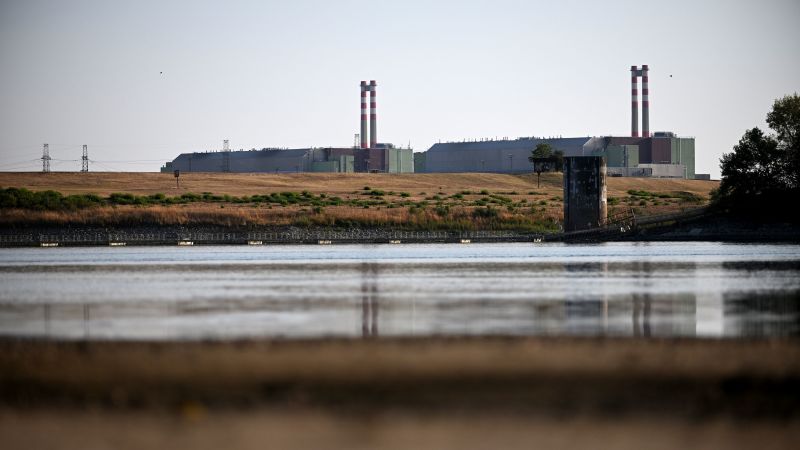
Hungary Nuclear Plant Nears Shutdown Amid Brutal European Heat Wave
Based on reports from Central Europe, Hungarian Prime Minister Péter Magyar warned on Monday that the country faces its hardest five days as the Paks nuclear power station teeters on the verge of a shutdown. Citing official statements, record-low water levels in the Danube River have severely compromised the cooling systems required to prevent a meltdown at the facility, which generates nearly half of Hungary's electricity.
According to energy authorities, water from the Danube is vital for cooling reactor cores and crucial components to avert a nuclear accident, and even a shutdown facility requires massive amounts of water. Magyar stated in a video address that the nation is in uncharted territory as receding water levels maintain the high probability of an emergency closure.
Later on Monday, Magyar noted that water management forecasts for the upcoming days had become slightly more optimistic, though the threat remained severe. The expected closure of the Paks plant for the first time since it came online 44 years ago poses a major risk of triggering a widespread national energy crisis.
Highlighting the wider regional impact, Francesco Sassi, an assistant professor specializing in energy security at the University of Oslo, posted on X that severe droughts and heat waves across Central and Eastern Europe demonstrate that water is as critical an energy commodity as gas or uranium.
Regional Energy Strain and Extreme Weather Disasters Across Europe
Citing reports from neighboring Romania, authorities took drastic measures by using controlled explosions on the Danube's Bala canal to divert water toward the Cernavoda nuclear power plant. The intervention follows a critical situation last month when two nuclear reactors at Cernavoda were forced to shut down simultaneously due to low water levels, prompting a national state of emergency.
Meanwhile, extreme weather continues to batter the entire European continent as relentless heat waves trigger severe droughts, dry out major waterways like the Doubs River, and fuel devastating wildfires. In Greece, tragedy struck over the weekend when two firefighting helicopters collided in midair northwest of Athens while battling blazes, resulting in the deaths of two crew members.
According to Italy"s Health Ministry, 25 cities were placed under a red alert on Monday as the nation"s fourth heat wave of the year intensifies. In the United Kingdom, Britain's Met Office confirmed that more than half of England and all of Wales are officially in drought after experiencing their driest July in 190 years.
Expressing gratitude toward the public, Magyar thanked citizens in Hungary for reducing personal and commercial energy consumption to maintain grid stability during the crisis. However, experts and officials maintain that the coming days will remain critically challenging as temperatures continue to rise without any meaningful rainfall in sight.
