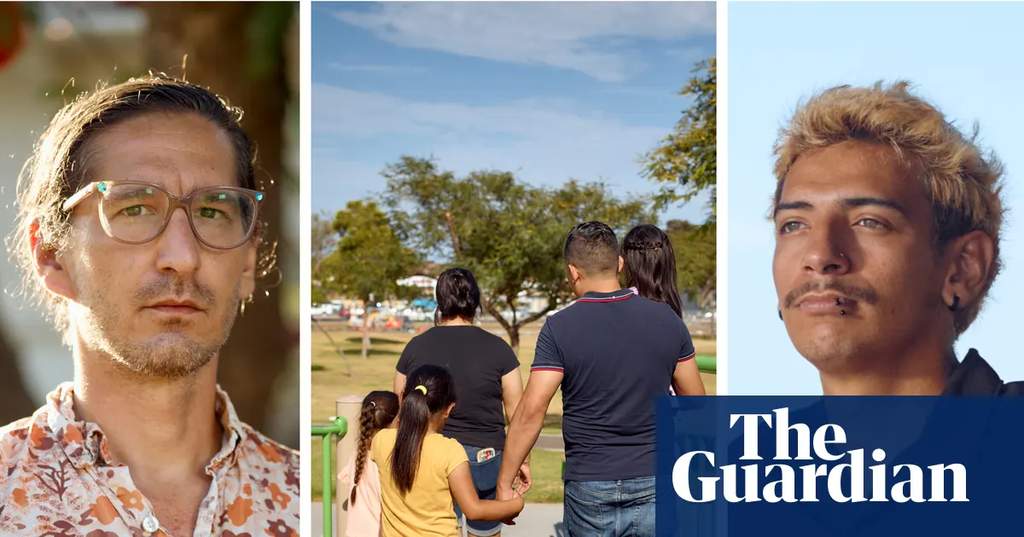
Massive Federal Immigration Raids Hit California Greenhouses
On a sunny morning last July, hundreds of heavily armed immigration agents in camouflage stormed a greenhouse complex in Camarillo, an hour north of Los Angeles. Citing reports from local media, the agents arrived equipped with face masks, firearms, chemical munitions, and armored tactical vehicles, completely blocking access along a road lined by local produce fields.
Based on reports from the Department of Homeland Security, the operation targeted two facilities owned by Glass House Farms, which is the state's largest legal cannabis brand located in Camarillo and Carpinteria. The aggressive sweep resulted in the apprehension of 14 minors and 361 adults, while a 56-year-old farm worker named Jaime Alanis tragically died after falling thirty feet from a greenhouse roof.
Among those caught in the chaos was Santiago, an undocumented farm worker from Mexico who had been working at the greenhouse for just three weeks. As agents flooded the property pointing firearms at panicked workers, Santiago experienced intense fear for his safety and worried about leaving behind his three United States citizen daughters.
According to officials, the high-profile operation served as a definitive capstone to aggressive immigration sweeps in Los Angeles, epitomizing the violent tactics that defined the first year of Donald Trump's mass deportation campaign. Genevieve Flores-Haro, associate director of the Mixteco/Indígena Community Organizing Project, noted that the raids acted as a harsh litmus test for federal enforcement limits.
A Chaotic Clash Involving Veterans and Protesters
As word of the greenhouse raid spread rapidly across the region, a large crowd of protesters gathered outside the facility perimeter to voice their opposition. Among the demonstrators was John Caravello, a local university philosophy lecturer and grassroots activist who sought to monitor the federal enforcement operation.
Around 12:50 PM, Caravello grabbed a smoking teargas canister that a border patrol agent had tossed toward the crowd and threw it back over the agents' heads. Hours later, law enforcement officers tackled him to the ground and transported him to an interior staging lot where other detainees were already being held.
Meanwhile, George Retes, an army veteran who served in Iraq and worked as a security guard at the greenhouses, drove through the chaos to report for his scheduled 3 PM shift. Retes stated that he encountered a confusing line of agents shouting contradictory orders with no clear coordination or de-escalation protocols in place.
Aerial footage soon showed the security guard's car engulfed in teargas smoke as officers shattered his window, pepper-sprayed him, and pinned him directly to the ground. Both Retes and Caravello, who are United States citizens, were subsequently taken to a federal detention center before eventually being released.
Legal Battles and Long-Term Community Fallout
The aftermath of the Camarillo greenhouse raids triggered months of grueling legal battles and emotional trauma for the individuals caught in the sweep. Caravello faced a federal grand jury indictment for felony assault stemming from the canister incident, carrying a potential sentence of up to twenty years behind bars.
However, during an April trial, a federal jury deliberated for two hours before finding Caravello not guilty after reviewing body-camera footage and defense arguments. Following his acquittal, Caravello renewed his commitment to community organizing by helping build a cross-union legal network and joining a class-action lawsuit against government funding policies.
For Santiago, the ordeal involved nearly six months of detention at the Adelanto facility in California, where he endured harsh conditions and separation from his young family. During his imprisonment, he participated in a hunger strike and maintained daily phone contact with his wife while his daughters struggled to understand his sudden absence.
In response to media inquiries regarding the incidents, DHS representatives did not comment directly on the men's specific experiences. However, agency spokespersons defended the operation by asserting that immigration officers faced hostile resistance and gunfire while working to secure the greenhouse facilities.
