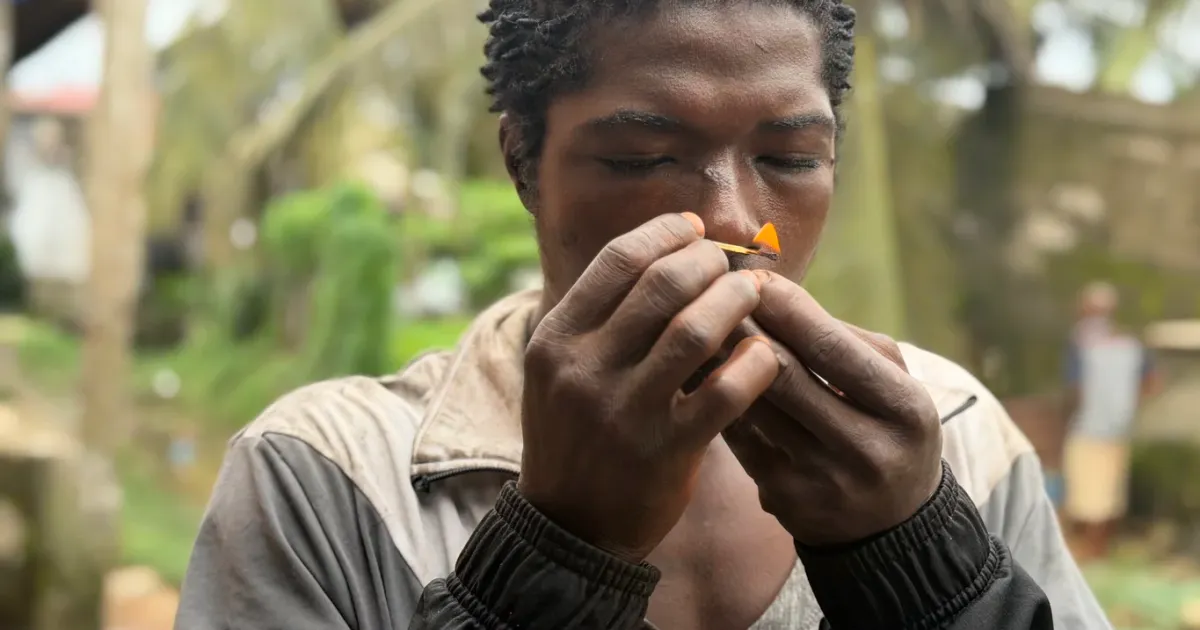
Devastating Impact of Synthetic Drugs on Liberian Youth
On the streets of Monrovia, Liberia, the devastating public health emergency surrounding the cheap synthetic street drug known as kush continues to unfold as families watch young people slip into severe addiction. According to reports from the region, the crisis has pulled children away from schools, homes, and everyday life since spreading into the nation from neighboring Sierra Leone. Local parents and community members state that the substance has severely impacted an entire generation, leaving countless individuals homeless and struggling to survive.
Miata Paye shared her personal heartbreak regarding her son, who first encountered kush in 2018 while attending the 10th grade. Citing reports from families dealing with the epidemic, Paye paid for rehabilitation twice, spending money on treatment alongside a 25kg bag of rice each time despite barely being able to afford the supplies. Unfortunately, after both attempts, her son returned to the roadside, prompting her to express deep anguish over the ongoing tragedy.
"This thing is killing our children," Paye said, describing the profound grief she experiences as her family deals with the devastating fallout of the addiction. Liberia officially declared drug abuse a public health emergency in 2024, yet affected families emphasize that the emergency remains an agonizing daily reality. Many young users drop out of school entirely and end up living on the streets where they are locally known as zogos.
Abraham Jackson represents one of many young individuals caught in this cycle, having smoked kush since he was 16 years old. Now 26 and without his high school education completed after his mother passed away and his father disowned him, Jackson noted that "nobody would pay attention to me" following the breakdown of his family support system. Treatment options remain severely limited across the country, as the government rehabilitation facility in Bentol City remains unfinished and private alternatives often lack proper oversight.
Massive International Narcotics Seizures Contrast With Local Arrests
While communities grapple with the visible consequences of street-level drug abuse, law enforcement authorities have uncovered evidence of a much larger international narcotics trade operating through Liberia. Figures obtained from the Liberia Drug Enforcement Agency indicate that authorities arrested 1,167 individuals on drug trafficking allegations between September 2025 and June 2026. However, during that exact same timeframe, Liberian courts recorded only eight convictions, translating to roughly one conviction for every 146 arrests.
This stark disparity suggests a criminal justice system that captures suspected street-level operatives far more frequently than it successfully prosecutes those who organize and finance the syndicates. The true scale of these international trafficking networks became entirely clear following two major cocaine seizures executed by security forces. On June 8 at Roberts International Airport in Margibi County, officers opened six cargo boxes declared as food seasoning to discover nearly 200 compressed blocks of cocaine weighing 237.6kg with an estimated value of 19.2 million dollars.
Weeks after the airport interception, security forces raided a warehouse in Duazon and recovered nearly four tonnes of cocaine. Police Inspector General Gregory Coleman described the operation as the largest cocaine seizure in the history of Liberia, estimating its overall value at roughly 317 million dollars. These massive discoveries reveal that international cartels are actively utilizing Liberian territory as a strategic transit route for high-volume drug shipments.
Special Agent G Orlando Demey of the LDEA explained that criminal networks continuously adapt their operations to evade pressure from law enforcement agencies. "Traffickers treated the emergency declaration like a weather report," Demey stated, noting that criminal activities temporarily slowed when the president announced measures before surging forward again as time passed.
Evolving Illicit Markets and Vulnerable Local Communities
Data from the Liberia Drug Enforcement Agency highlights how quickly the illicit drug market shifts in response to government crackdowns and policy changes. Kush seizures more than doubled from 80.15kg in 2025 to 166.88kg between September 2025 and June 2026, with approximately 38 percent of arrested suspects identified as foreign nationals mainly from Ivory Coast, Guinea, Nigeria, and Sierra Leone. Furthermore, after authorities banned the opioid painkiller tramadol in August 2025, tapentadol seizures rose dramatically from 3.61kg to 198.5kg.
Local community leaders have increasingly stepped up to serve as a vital bridge between frightened residents and law enforcement by identifying local drug ghettos. Thomas Wesseh, a local leader who helped authorities locate dens in his community, experienced the crisis directly when his own son dropped out of college and began living in a local cemetery. Wesseh pointed out that local citizens who cooperate with law enforcement often feel exposed and vulnerable because suspected dealers frequently return to neighborhoods shortly after police raids conclude.
"The LDEA would carry out a raid, and after two days, they"re back in the community and begin to threaten us,' Wesseh explained regarding the ongoing security risks faced by residents. While the government has promised tougher enforcement measures, enhanced border controls, asset seizures, and expanded rehabilitation services, families impacted by the crisis continue demanding broader accountability. Critics and relatives argue that current enforcement strategies disproportionately target vulnerable users rather than apprehending the primary architects behind the trafficking rings.
As the situation persists, families like Miata Paye"s maintain that true resolution requires targeting the root of the supply chain rather than just the victims of addiction. "They are only after the users, not the ones bringing it in,' Paye remarked, emphasizing that the true cost of the crisis is measured in the young lives left behind.
