Crude Oil Plummets Across Global Markets
Crude oil prices fell sharply while stocks and government bonds rallied on Monday after President Donald Trump cancelled planned military strikes on Iran and claimed that peace talks were about to resume across the Middle East. Based on reports from financial exchanges, Brent crude dropped significantly by 5% to trade at $83.47 a barrel by lunchtime, following an even steeper fall of up to 7.3% to $81.55 a barrel earlier in the session.
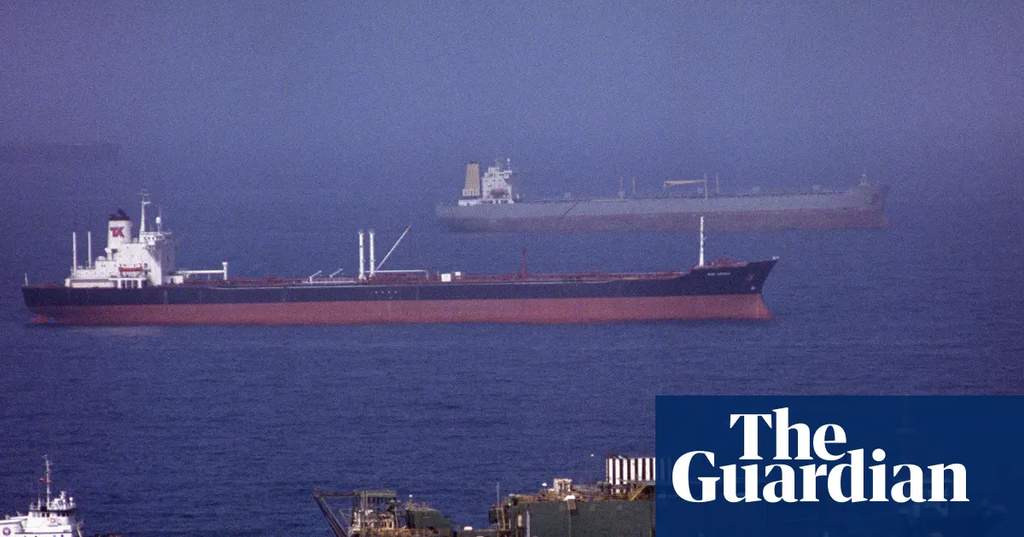
Citing reports from energy markets, United States West Texas Intermediate also experienced a notable downward correction, dropping more than 5% to settle at $79.47 a barrel. Both primary global oil benchmarks had previously jumped by more than 20% throughout July due to renewed fighting between the United States and Iran, alongside mounting attacks on several commercial vessels in the strategic Strait of Hormuz.
According to statements published by President Trump late on Saturday on his Truth Social platform, officials from Iran and other Middle Eastern nations had requested time to finalize a comprehensive agreement. This proposed deal aims to achieve the immediate, complete, and total reopening of the vital shipping passage alongside a permanent end to ongoing nuclear security threats from Tehran.
Although Trump announced on Sunday that diplomatic discussions would commence immediately on Monday, reports noted that these claims were initially met with denial from officials in Tehran. Meanwhile, shipping data confirmed that two separate tankers laden with Saudi oil successfully crossed the Bab el-Mandeb strait out of the Red Sea over the weekend while traffic through the Strait of Hormuz slowed down significantly.
European Stocks Rally as Inflation Fears Ease
In a positive start to the month of August, European shares climbed higher while United States stock futures pointed toward a strong opening bell on Wall Street later in the trading day. The pan-European Stoxx 600 index recorded a solid gain of 0.5%, driven largely by strong performances across travel and leisure shares which surged by 2.1% despite energy stocks sliding about 2%.
The United Kingdom benchmark FTSE 100 index gained 30 points by midday, showing resilience despite being weighed down temporarily by negative investor reactions to ongoing corporate talks involving AstraZeneca. Kathleen Brooks, the research director of the financial broker XTB, noted that the sudden drop in crude oil prices will provide crucial support to broader financial markets.
According to Brooks, this reduction in energy costs will effectively ease persistent inflation fears and act as a strong dampener on government bond yields that rose sharply during the previous week. She highlighted that long-term yields, including thirty-year United States Treasury yields, had recently jumped to reach their highest recorded levels in nineteen consecutive years.
In bond markets across the United States, Treasury valuations increased visibly, pushing the benchmark ten-year bond yield down by five basis points to settle at 4.68%. This downward movement represented a notable retreat from the highest yield levels observed since January, offering temporary relief to institutional investors and fixed-income portfolios.
Motoring Costs and Global Production Updates
Fuel prices for drivers in the United Kingdom continued to climb upward over the weekend just as families began departing for their seasonal summer holiday breaks. Petrol prices hit a new war-era high of 160.85p a litre on Monday, surpassing the previous record set on Friday, while diesel prices pushed past the 180p threshold for the first time since June 9 according to data from the RAC.
Simon Williams, head of policy at the motoring group, stated that unleaded fuel has climbed by more than 10p a litre since reaching a temporary bottom in early July. "Unleaded has now risen more than 10p a litre since bottoming out at 150.59p on July 6 while diesel is up 16p a litre, almost fully reversing June"s record monthly reduction,' Williams explained regarding the ongoing pump price increases.
On the supply side of the energy sector, the Organization of the Petroleum Exporting Countries and its allies agreed on Sunday to increase oil production by roughly 188,000 barrels a day starting in September. However, analysts pointed out that ongoing export disruptions across the Gulf, Russia, and Kazakhstan caused by regional conflicts mean these planned production increases will likely have minimal immediate impact on market prices.
Tony Sycamore, a senior market analyst at investment platform IG, warned that traders remain cautious about potential volatility in the days ahead. "The bigger focus is whether this week turns into a rinse and repeat of last week, with hopes of a deal collapsing as Iran digs in its heels," Sycamore cautioned regarding persistent geopolitical risks.
