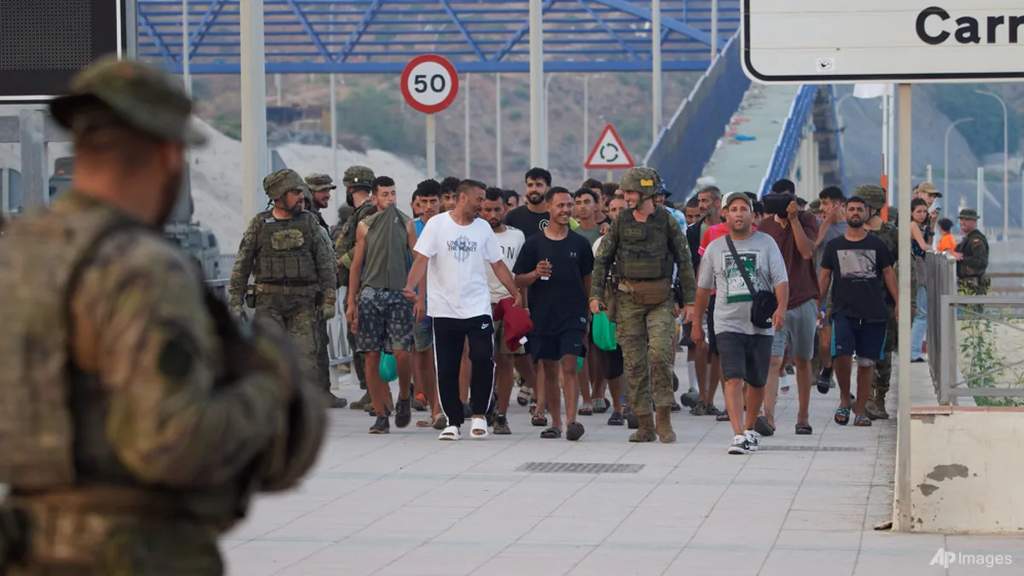
EU Proposes Expanded Support For Morocco
European Commission President Ursula von der Leyen proposed on Monday, August 3, 2026, that the European Union further strengthen its borders and increase financial and technical support for Morocco to help prevent a repeat of the chaotic influx of 50,000 migrants into the Spanish enclave of Ceuta last week.
The massive surge began on Thursday at one of the European Union"s only two land borders with Africa, triggering immediate alarm across member states and putting pressure on the bloc"s migration framework.
Migration has remained one of the most divisive political issues within the European Union since the 2015-2016 migration crisis, when more than a million refugees and migrants arrived in Europe.
"Morocco is an important strategic partner, particularly in our efforts to combat migrant smuggling and illegal migration," von der Leyen wrote, emphasizing the necessity of enhancing early-warning systems.
Ceuta Crisis Tests New Migration Pact
The recent border breach in Ceuta serves as the first major real-world test of the European Union's newly enacted Migration Pact, which formally entered into force in June following years of complex negotiations.
While the pact aims to establish common migration rules and foster stronger solidarity among member states, the recent chaos demonstrated deep vulnerabilities in handling sudden mass influxes.
"The idea of the pact is control and solidarity between EU member states, yet we have seen the opposite," said Bram Frouws, director of the Mixed Migration Centre, highlighting the political risks involved.
In response to the sudden crisis, Italy temporarily suspended passport-free Schengen travel arrangements with Spain for a month, while 22 out of 27 EU members urged coordinated action to reinforce external borders.
Experts Warn Of Reliance On Transit Nations
The European Union increasingly relies on external migration agreements with North African countries to curb irregular arrivals and manage regional border security effectively.
However, critics and policy analysts argue that this heavy reliance on neighboring transit countries leaves European nations vulnerable to political leverage and sudden shifts in enforcement policies.
'Europe"s increasing reliance on neighbouring countries for migration control may reduce arrivals in the short term, but it can also provide those countries with significant political leverage," warned Alberto-Horst Neidhardt, senior policy analyst at the European Policy Centre.
Morocco stated that the mass crossings were fueled by social media misinformation, human trafficking networks, and misinterpretations of a Spanish court ruling, with most unauthorized border crossers ultimately returning to Moroccan soil.
